
Posts

Night shift with the bicycle cops

An interview with Don Gillmor, author of Cherry Beach

Cherry Beach by Don Gillmor. Cover designed by Kate Sinclair.

Don Gillmor’s latest book—a layered literary crime thriller called Cherry Beach—comes out next Tuesday and has already been leading our Canadian sales for the past couple of weeks. It recently made the CIBA Booksellers’ List—a list of favourite spring releases voted on by indie Canadian booksellers. It’s always extra special when indie bookstores vote for books by indie presses, and honestly kind of annoying when they don’t. (6/20 of the books on this spring list are indie, but who’s counting?)

Cherry Beach is one of those novels that succeeds at being for all kinds of readers. Gillmor, who’s written on a wide range of topics over the course of his career—as a journalist, as well as a novelist—knows how to fill a story with the tidbits of information that make up the substance of real life. I learned some Toronto geography; I also learned how to make a nice jalapeño marinade for my pork tenderloin. On the one hand, this is a propulsive, gripping detective story. On the other, Cherry Beach has the qualities I love of a plotless literary novel, including the interiority of a lonely, slightly-delusional protagonist I can relate to.

Readers have been comparing Cherry Beach to The Wire for the ways it characterizes a city (Toronto in this case, instead of Baltimore), and the ways it balances racial and economic tensions while gradually revealing a complex, shadowy network of crime. But it’s also interesting to me that a 263-page book could even be comparable to a show that takes approximately 60 hours to watch. Yet it is. Gillmor doesn’t waste space, and I’m still thinking through some of the book’s connections, as the intensifying summer heat of the novel seeps into the hours spent away from it.

I had the pleasure of sending Don Gillmor a handful of questions about Cherry Beach, which he graciously answers below.

Dominique,
Publicity & Marketing Coordinator


A Biblioasis Interview with Don Gillmor

Author of Cherry Beach (April 14, 2026)

Don Gillmor. Credit Ryan Szulc.

You’ve written many kinds of books (literary novels, a memoir, books for children, a field note about oil, a fictionalized history of Canada). What made you want to write a crime novel?

I’ve always wanted to write a detective novel. In university, I began reading some of the classic detective novels from the 1930s, 40s and 50s—Dashiell Hammett, Raymond Chandler, Ross Macdonald, Chester Hines. It was partly a relief from Eighteenth Century British Literature courses. At the time I thought it would be interesting to write one. It took me a while to get around to it.

How much of Cherry Beach is based on true events and real people?

There are parts of the novel that are informed by, if not based on, real events or people. Years ago, when I was doing a lot of journalism, I wrote an article for Toronto Life on 51 Division, which was then sometimes called the Punishment Station because bad cops from other divisions were sent there. At the time, they were also experimenting with community policing—mostly young cops on bicycles engaging with the community. So there was a clash of cultures—two very different views on policing. To a degree, I revived that idea in Cherry Beach. I went out on the night shift with the bicycle cops and there are a few scenes that are taken from that experience, including the opening conversation with the sex worker. I also went out in police cars with the hardcore cops in the division. An interesting perspective.

I wrote a magazine article that took me to Kingston, Jamaica, looking for a suspected murderer (I didn’t find him), but the trip into the red hills and the conversation with the Justice Minister are based on my own experience there.

And Torontonians may recognize aspects of a former mayor.

Toronto readers! Don’t miss Don’s launch at The Supermarket with fellow Biblioasis author David Macfarlane (On Sports).

In Cherry Beach, Toronto is essentially the main character, and we witness its character development throughout the book. How was writing the character of Toronto different from writing a human character (or was it the same)?

I wanted the city to be a large part of the book. In part because it’s a complex place, claiming to be the most multicultural city in the world. So we’re sort of a global experiment. In many ways, we’re a grand success. But there remains a lot of work to be done. There are issues of affordability and racism, and our traffic is amongst the worst in North America.

As a reader, I always enjoy seeing cities from a literary perspective, whether it’s Dennis Lehane’s Southie neighbourhood in Boston, or Elmore Leonard’s Detroit, or the Venice of Donna Leon. So I wanted to look at Toronto from the perspective of its extremes—the privileged and the underclass. There was a time when the richest and poorest neighbourhoods (Rosedale and Regent Park respectively) were essentially adjacent to one another, though the area has since gone through major changes.

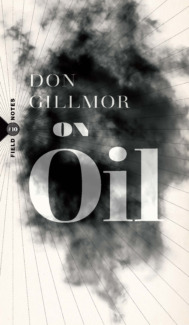
Don Gillmor’s other book with Biblioasis, On Oil, was recently announced as a finalist for the Writers’ Trust Shaughnessy Cohen Prize.

Detective Jamieson Abel is a great cook, and this book is full of wonderful recipes. I’m interested to know more about your decision to include this aspect of his character.

It’s mostly an extension of my own interest in cooking. I learned to cook as a matter of survival—a series of girlfriends with many wonderful qualities, but no interest whatsoever in cooking. So I started to learn. Cooking opens up a world. I think it’s one of the reasons for the success of cooking shows; they form a kind of community and bridge cultures. Abel is quite isolated—a single, middle-aged man who has alienated much of the department he works for. Cooking is a way for him to engage with the world.

What were some of your influences for Cherry Beach, literary or otherwise?

There are two different directions as far as influences go. On the one hand, Jamieson Abel is (sort of) in the tradition of what were once called hard boiled detectives—Ross Macdonald’s Lew Archer, Chandler’s Philip Marlowe et al. But there is also a tradition of literary novelists like Kate Atkinson, John Banville, and Michael Redhill, who all write detective novels as well. I understand the appeal of crime fiction for literary novelists, but it presents certain challenges as well. As a rule, literary novelists don’t have to concern themselves with plot. But with crime fiction, you need plot, and it has given me a fresh appreciation for those writers who do it well.

Bonus pic of our office dog Sammy with his copy of Cherry Beach!

In good publicity news:

  • Cherry Beach by Don Gillmor has been included in the CIBA Spring 2026 Booksellers List: “If the dayglo film-filtered cover of an aging high rise on a summer day doesn’t intrigue you, maybe a comparison to The Wire but ‘make it Toronto’ will do the trick. Cherry Beach is a propulsive genre mash-up of Canadian crime and literary fiction.” (Robyn York, Beach Reads Bookshop)
  • On Sports by David Macfarlane was featured in The Tyee: “A showcase of [Macfarlane’s] breezy control over the nuts and bolts of professional and amateur athletics, their cultural import as well as the rhythms (and seasons) of sports writing.
  • Every Time We Say Goodbye by Ivana Sajko (trans. Mima Simić) was reviewed in On the Seawall: “Mima Simić translates all of this with clarity and verve . . . alternately riveting and heartbreaking.” The book was also featured in Electric Lit’s list of 15 Must-Read Small Press Books of Spring 2026: “Every sentence sings with emotional resonance and is imbued with the protagonist’s regret . . . a master class in both economy of language and expansiveness of feeling.
  • Decadence by Richard Kelly Kemick was reviewed in Publishers Weekly: “Kemick’s wit and curmudgeonly self-regard is offset by his palpable adoration of his partner, Litia, evoking the work of David Sedaris. It’s a weird and rewarding ride.

In strange company

Poems from Who Else in the Dark Headed There by Garth Martens

Who Else in the Dark Headed There by Garth Martens. Cover designed by Ingrid Paulson.

Since it’s Poetry Month, and we’re standing at the threshold of the long Easter weekend, I want to write a little something in defense of literary suffering.

So much of my job involves trying to get people to read our books. And there’s always a vague external pressure to swaddle my book pitches in positive language. Readers want hope to shine through our frequently bleak books. And people are often less willing to engage with difficult texts, texts that require long hours alone flailing through another’s dimly-lit interiority. There’s an unspoken publicity agreement that despair, suffering, etc. be made palatable to a potential audience.

Yet literary portrayals of suffering seem valuable and interesting to me regardless of any transcendent qualities the mind feels compelled to impose on them. And what makes suffering interesting to read isn’t its universality: it’s the weird, inaccessible, hyper-particular reaches of a stranger’s consciousness. I want more of that. Not the performative, uplifting attempt to reach as many readers as possible, for a text to be seen as a knowable quantity. I want literature that feels alien, difficult to understand, that I have to circle again and again, banging my head against the walls of, trying to get further in. Earned moments of affinity or empathy feel so much more vital than the stuff popularized in the name of the heartwarmingly universal.

This has nothing to do with needing a little escapism, which is valid. I spend a desperate amount of time, like anyone, trying to put some distance between myself and all reminders of being a body-mind complex hurtling through time. That’s why I watch as much hockey as I do. But the Victoire clinching their playoff spot last night, and the Habs’ six-game winning streak, isn’t what keeps me going. Those are small pleasures—a little thrill for the prefrontal cortex.

What does keep me going, rather, has been consistent my entire life. It’s the unusual, painful companionship I found in Woolf when I was fourteen, or again in the poet Paul Celan when I was twenty-two, or again—just last year—when our managing editor, Vanessa, sent me Garth Martens’ poetry manuscript. It’s something about what happens when I’m alone with a voice that keens its own indescribable aloneness. The ease with which understanding comes—between reader and text, author and world—has so little to do with the kind of affinity that feels miraculous and life-altering.

With that, I’ll leave you with a handful of Garth Martens poems from his forthcoming collection Who Else in the Dark Headed There (April 14). I hope they reach you with the force of their individual darkness, and keep you in strange company over the long weekend.

Dominique
Publicity & Marketing Coordinator


Excerpts from Who Else in the Dark Headed There

Interior table of contents for Who Else in the Dark Headed There.

Late Winter

Gloved, I undercut
the snowcrust, its changeable
emergencies,
until the shelves fell.

Worlds that mirror this one
swung like white revolving doors.
Deciduous rods,
snow: it lifted higher: higher.

What rough potato
overrode the limit of the pail?
From what
precarity is it chored up?

Ice-strip on the move,
on high
or on my tongue,
not here, but here.

A tug of breath from a tap.
A snort through dense hedges.
Transfusion
of allusive, useless ideas.

Snow leapt and plunged.
I waited for the rendezvous.
I waited for the switch.


Dilemmas

Nobody asks for them.
They come
unpermitted. The sickroom

sweats on every hard bud
and somnolent,
those cut loose by those departed.

With a spade, the boy turns up
a tidy
padlock of steam.

A sole strand
air-slips
as through a keyway.

His whole life mist
rinses
and perspires: rock, barrel, bough. Alters

his world: a nook, a bridge,
an apple tree
whose full bearings

are shadowless, odd trespasser.


Distaff Side

She left behind a vanity mirror.
The boy held it face-up
at his chest. Walked without seeing his feet

as if upside down, as if blank, into
blurred
big blades, chunks of wall. Nauseous.

It bears saying he didn’t need
to do it to feel—a rush, out of place
or in danger in this house.

This was the closest he got
to putting on make-up,
erased from the waist down.

In deprived air, he detected
heated dust in the drapes, a pang
of flight. Wasp-like focus or glare.

From the bay window he beamed drivers.
Not to hurt them. To see
in their flinch a second face.


Afterwinter

Blowing gas through a wand,
I see a fruitfly drift into the seal.
I remember canola’s upstart gold flow. It went
as far as justified, our one
paved road in six directions.
Past this, there is of one
element not enough
and of another too much. Swans
in the flooded field.
Investors sprinting
pints of treacle
among tired farmers. Gossip
like crushed egg. That too,
for hold-outs who refuse their glass of milk.
And me? In a near playground
a pink, hooded jacket foisted on a bollard
like one doubled over
in despair. There is inside me a Pillarist
who infinitely extends
this moment of the gut punch. It’s far
from overrated, far from fair.
So full of my own blood
I am nauseous as anyone
who sells too well their steal.


In good publicity news:

  • Precarious: The Lives of Migrant Workers by Marcello Di Cintio has been named a finalist for two 2026 Alberta Literary Awards: the City of Calgary W.O. Mitchell Book Prize and the Wilfrid Eggleston Award for Nonfiction. Huge congrats to Marcello!
  • Cherry Beach by Don Gillmor was listed in Toronto Life, and was reviewed in The Seaboard Review: “A largely captivating novel, the sentences by turns clipped and spare or expansive and stunning. And befitting of an author who’s spent so much time in journalism, Gillmor doesn’t pull any punches. The world he gives is an ugly one, much like our own.
  • Every Time We Say Goodbye by Ivana Sajko (trans. Mima Simic) was reviewed in roughghosts: “The relentless nature of the narrative style heightens the emotional intensity of this novel, allowing for an in depth portrait of one man’s past and present to emerge in a relatively limited space.

Media Hits: UNMET, The Passenger Seat, Baldwin Styron and Me, and more!

IN THE NEWS!

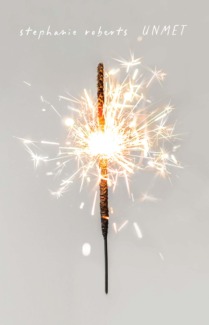
UNMET

UNMET by stephanie roberts was reviewed in a poetry feature in the Literary Review of Canada. The review will appear in their May print issue, and is available online here.

Emily Mernin writes,

“In alternately nervous and incisive modes, roberts explores the profound contradictions behind even the most clear-eyed criticisms or desires . . . With a resolute inward stare, roberts reveals the cumulative nature of life.”

UNMET was reviewed in The Woodlot on April 7, and you can read the full review here.

Chris Banks writes,

“[roberts’] language is ‘surprise-drenched’ . . . this fantastic book is a piling on of surprising images and poetic structures and creative desires allowing both reader and poet the opportunity to rise above the Dollar Store desolation and grief and human injustice that plague our society.”

UNMET was featured on the CBC Books list of “39 Canadian poetry collections coming out in spring 2025.” You can check out the full list here.

Get UNMET here!

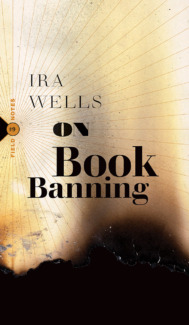
ON BOOK BANNING

On Book Banning by Ira Wells was reviewed in the Literary Review of Canada. The review will appear in their May print issue, and is available online here.

Keith Garebian writes,

“With this slim volume, Wells lays out cogent arguments against culture warriors who continue to warp our children’s relationship to literature . . . Wells persuasively explains how book banning reduces and devalues art and how it constitutes an attack on intellectual autonomy and on ‘your right to determine the future of your own mind.'”

Ira Wells spoke on an episode of TVO’s The Agenda for the segment “How Does Book Banning Hurt Democracy?” You can watch the full segment here.

Get On Book Banning here!

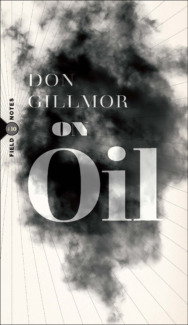
ON OIL

Don Gillmor, author of On Oil, was interviewed on TVO’s The Agenda on April 10. You can watch the full segment “Should Canada Rethink Its Relationship to Oil?” here.

Don Gillmor wrote an article, “Why Trump Needs Canadian Oil,” for Maclean’s on April 8. Read the full article here.

On Oil was also featured on the CBC Books list of “29 Canadian books you should be reading in April.” You can view the full list here.

Get On Oil here!

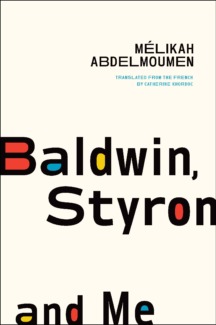
BALDWIN, STYRON, AND ME

Baldwin, Styron, and Me by Mélikah Abdelmoumen (translated by Catherine Khordoc) was reviewed in the Literary Review of Canada. The review will appear in their May print issue, and is available online here.

Amanda Perry writes,

“Abdelmoumen’s work . . . demonstrates the good faith conversations being held within a cultural scene that is both local and transnational in its outlook.”

Grab Baldwin, Styron, and Me here!

THE PASSENGER SEAT

The Passenger Seat by Vijay Khurana was listed in the Guardian‘s “Best Australian books out in April.” The list was published on April 4, and can be viewed here.

Steph Harmon calls it,

“A tense and gripping power struggle of toxic masculinity, as the teenagers push each other further and further down a violent road of no return.”

The Passenger Seat was reviewed in Rabble on April 10, in the article “Walk like a man: Toxic masculinity in crime fiction, fact and spoken word.” You can read the full review here.

“The structure of the book and its lyrical prose combine to make telling points about toxic male bonding and its relationship to sexist violence, all without any counterproductive lecturing or explicit judgements. The magisterial way that Khurana uses the classic elements of noir crime writing to challenge and subvert those very elements is impressive.”

Grab The Passenger Seat here!

RIPPER

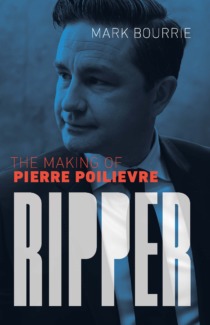
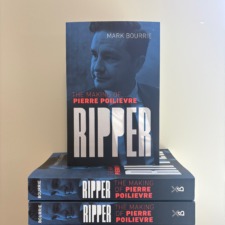
Ripper: The Making of Pierre Poilievre by Mark Bourrie was featured a The Hill Times article about Poilievre on April 14. Check out the full piece here.

Susan Riley writes,

“Former political journalist Mark Bourrie’s new book, Ripper, is a bracing reminder of some of the reputations Poilievre has ruined, the malicious fictions he has promoted, [and] the tiresome slogans he stitches into every utterance.”

Ripper and author Mark Bourrie were featured on Vancouver CityNews’s NewsRadio Bookshelf on April 13. You can listen to the short interview or read the article here.

John Ackermann notes,

“The book is a more pointed treatment of its subject than Andrew Lawton’s Pierre Poilievre: A Political Life, which came out last year when the Tories were still riding high in the polls.”

Ripper was mentioned in Dan Garner’s Substack as a book to check out. You can read the full article here.

“If it weren’t for Mark and a small number of others willing to make sacrifices, popular Canadian history would have vanished entirely from book stores.”

Get Ripper here!

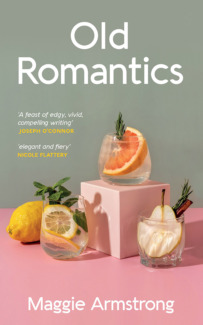
OLD ROMANTICS

Old Romantics by Maggie Armstrong was reviewed in the Winnipeg Free Press on April 5. Check out the full review here!

Ron Robinson writes,

“Armstrong offers fine, astute turns of phrase in her writing . . . The reader’s delight in the stories may range, then, from ‘you go, girl’ to a censorious ‘it will all end in tears’ depending on your age and experience.”

Grab a copy of Old Romantics here!

COMRADE PAPA

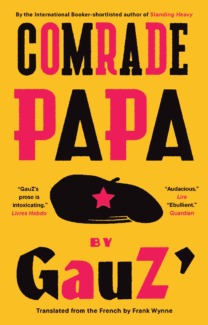
Comrade Papa by GauZ’ (translated by Frank Wynne) was reviewed in the Winnipeg Free Press on April 12. You can read the full review here.

Zilla Jones writes,

“This is a postcolonial novel that questions the dominant narrative with humour and heart.”

Grab Comrade Papa here!

QUESTION AUTHORITY

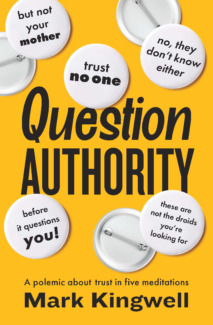
Question Authority by Mark Bourrie was reviewed in the New York Journal of Books, which can be read here.

Karen R. Koenig writes,

“A master of words who is well-versed in philosophy, political science, sociology, and psychology, [Mark Kingwell] writes with deep affection and hope for humanity and openly shares his darkest and brightest moments along life’s bumpy road. Though this is a serious book requiring thoughtful reading, Kingwell’s wit will make readers laugh out loud at him and at themselves.”

Get Question Authority here!

SORRY ABOUT THE FIRE

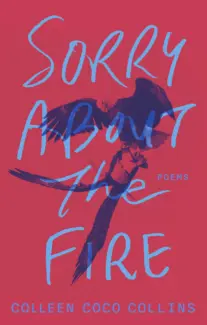
Sorry About the Fire by Colleen Coco Collins won 3rd Prize in the Alcuin Award for Excellence in Book Design in Canada’s Poetry category! The award was given to the book’s designer, Natalie Olsen. You can view the full list of winners here.

Grab Sorry Abou the Fire here!

The Bibliophile: Scathing, surgical, and colourfully entertaining

Want to get new excerpts, musings, and more from The Bibliophile right away? Sign up for our weekly online newsletter here!

***

Mark Bourrie’s Ripper: The Making of Pierre Poilievre has quickly become a national bestseller; this week, it sits at #3 on the Canadian Nonfiction list. Despite initial worry that the election call would hinder the media’s ability or willingness to cover a critical biography of the Opposition leader, it’s great to see Bourrie’s hard work pay off. And we’re especially grateful for all the journalists who are showing up to write thoughtful, non-partisan coverage during this increasingly terrifying period. We’re also grateful to the people who are taking the time to read books like Ripper ahead of election day (or any day): we all have to stay vigilant.

Dominique Béchard,
Publicist

***

Ripper: Ottawa Launch

The Walrus

“Poilievre is a pro-American libertarian who moralizes the sufferings of the marginalized, insists the free market has inherent genius, drives wedges between the regions of the country, and exploits class envy. By the early winter of 2025, the political gears of the country changed. The political fight in Canada quickly became about who was best to face the external threat and whose ideas were best to help Canadian families and businesses at a time of real danger. On April 28, we’ll know if his brand of politics will survive the very crisis it claimed to prepare for.”
—Mark Bourrie, excerpted from Ripper

Globe and Mail

“Mark Bourrie has produced a searing but convincing critique of the Conservative Leader’s shortcomings that will give pause to anyone outside the diehard Poilievre base.”
Charlotte Gray

“In his pull-no-punches book, Mr. Bourrie portrays Mr. Poilievre as one serious ripper: mean, sneering, insulting, truth-evading, skilled at whipping up mass anger.”
Marsha Lederman

“If Pierre Poilievre is going to win, shake [the comparison to Trump] he must. This book, with all its pungent reminders of his record, will make it harder to do.”
Lawrence Martin

“‘It’s an intense subject, the future of Canada—there isn’t anything more important than that, and at a time of revolution, which I think we are in,’ [Bourrie] says . . . The story was there; he just needed to collate the pieces.”
Josh O’Kane

Photo: Ripper: The Making of Pierre Poilievre by Mark Bourrie. Cover designed by Ingrid Paulson.

Toronto Star

Bestsellers Lists: #3 on the Canadian Nonfiction list, and #7 on the Original Nonfiction list.

Interview with Mark Bourrie and Stephen Maher, excerpted:

Stephen Maher: One of the pleasures of your book is the attention it pays to the social and economic forces Poilievre has harnessed. You argue persuasively that Trudeau let Poilievre become a champion for the working class by neglecting their concerns and failing to communicate. But every incumbent government around the world had a similar crisis. Was it really Trudeau’s failure, or was it just that the situation created an opening for a person such as Poilievre?

Mark Bourrie: I think it’s a systemic failure among centrists, people on the left and even the union movement to maintain a good, strong relationship with shop floors. And we saw that folks realized there was this great big working-class vote out there that wasn’t being tended to. And the Liberals, after the first year of COVID, could not communicate with anybody. They were just so disconnected. Canadian conservatives went to the United States and learned this stuff, but it was also something that former British Prime Minister Boris Johnson was able to pick up on. It’s something that the Brexiteers were able to pick up on, as well as the AFD in Germany.

Winnipeg Free Press

“Despite [the rush to print], the work never seems rushed. It is lengthy and historically detailed while relying on media, secondary sources and parliamentary debates.”
—Christopher Adams

The Tyee

“This book is a phenomenal effort, carefully researched and nicely written. Ripper should be widely read by everyone who cares about the value of casting an informed vote on April 28.”
—Michael Harris

Hill Times

“Every Liberal in their war room, every journalist covering the campaign and—should he win—every stakeholder doing business with an eventual Poilievre government owes it to themselves to read Bourrie’s Ripper so that they can have a clear picture of who Poilievre is, how he came to be, and how that past is almost certain to shape his decision-making going forward.”
—Jamie Carroll

CBC Windsor Morning


Cult MTL

“The page-turner is crack for political junkies.”
—Toula Drimonis

NB Media Co-op

“Mark Bourrie’s new book is a detailed and surgical examination of the man who could be Canada’s next prime minister.”
—Gerry McAlister

UnHerd

“In a scathing but comprehensive recent biography, Ripper: The Making of Pierre Poilievre, the historian Mark Bourrie points out that his [Poilievre’s] thinking on most subjects has not advanced much since adolescence.”
—Michael Ledger-Lomas

Canuckleheads Podcast

That Shakespearean Rag

“By positioning Poilievre in the context of the global social and economic cleavages that permitted him him to attain power, Bourrie transcends a simple biography and creates a snapshot of our riven historical moment, one that should prove illuminating for anyone looking around in abject confusion and wondering how we got to this particular point.”
—Steven W. Beattie

Ken McGoogan

Ripper has no business being so detailed and wide-ranging, so authoritative and convincing, so brilliantly analytical and colourfully entertaining.”

On Substack:

“Bourrie writes an honest and comprehensive account of Poilievre’s and offers a look at where he might take the country. The book is no hagiography, but nor is it a hatchet job (a lesser author might have been less disciplined). It’s a fitting, if disconcerting, election primer.”
—David Moscrop

“His [Mark Bourrie’s] latest book RIPPER isn’t just a biography—it’s a field guide to fascism wrapped in a Canadian flag soaked in Axe body spray.”
—Dean Blundell

“[Ripper] is far from a hatchet job. Bourrie appreciates Poilievre’s cunning and instinct for the jugular—he just doesn’t like him too much.”
—Ethan Phillips, Oversight

“Bourrie’s critical of Poilievre . . . But he reflects on Poilievre’s strengths and weaknesses, informed by close observation of the Conservative leader’s entire career.”
—Paul Wells

“Bourrie’s style is accessible, the prose is clear and sparse . . . Bourrie’s dry wit brings a chuckle now and then.”
—Margaret Shkimba

“[E]xcellent instant bestseller.”
—Rose Simpson, Rose’s Cantina

Media Hits: RIPPER, UNMET, ON OIL, and more!

IN THE NEWS!

RIPPER

Ripper: The Making of Pierre Poilievre by Mark Bourrie was reviewed by Charlotte Gray in the Globe and Mail on April 1. You can read the full review here.

Gray writes,

“Mark Bourrie has produced a searing but convincing critique of the Conservative Leader’s shortcomings that will give pause to anyone outside the diehard Poilievre base.”

Ripper was also reviewed in the Hill Times on April 2. Check out the full review here.

Mark Bourrie was featured in the Toronto Star in conversation with Stephen Maher. The article was published online on March 29, and you can read it here.

Get Ripper here!

UNMET

UNMET by stephanie roberts was reviewed in The Miramichi Reader on April 1. Check out full review of this poetry collection here.

Pearl Pirie writes,

“[roberts] admirably permits wide swathes of herself on the page, yet without being didactic or maudlin and without overwriting.”

stephanie roberts was interviewed by Olive Andrews for The Ex-Puritan‘s Winter 2025 issue. Read the full interview here.

Andrews writes of the collection,

“The poems are both singular and vast, wading through moments, objects, and places with visceral clarity while guiding the reader through the thrashing waves of its overarching themes: loneliness, pandemic, domestic violence, ecological crisis, police brutality, and more. The work is grounded and groundbreaking, pointed and sprawled. “

stephanie roberts was also interviewed for Open Book‘s ‘Poets in Profile’ on March 28. Check out the interview here.

Open Book writes,

“stephanie roberts returns with another complex and stunning work that looks at both the seen and unseen, and explores social issues through lyric and line in a truly singular way.”

Grab UNMET here!

ON BOOK BANNING

Ira Wells, author of On Book Banning, was interviewed by David Moscrop this week in The Jacobin. The article, “The Shared Logic of Censorship,” discussing censorship and what’s being done to combat it, can be read here.

From the interview, Wells says:

“Education involves building up critical thinking facilities and faculties. Indoctrination involves breaking them down. Education involves inculcating independent thinking. Indoctrination involves submission to doctrine.

We need to rediscover that distinction. And we need to revive the best spirit of our democracy.”

Grab On Book Banning here!

ON OIL

On Oil by Don Gillmor was featured on LitHub‘s list of “10 Nonfiction Books to Read in April.” Check out the full list here.

LitHub writes,

“Gillmor . . . draws a line from the greed and hubris at the heart of that first explosion straight to the present day—and beyond.”

Get On Oil here!

THE PASSENGER SEAT

The Passenger Seat by Vijay Khurana was reviewed in The Tyee, for the article “There’s Power in Male Bonding. Must There Be Menace?” The review was posted on March 28, and you can read it here.

Tom Sandborn writes,

“Khurana employs classic tropes of the buddy road trip and crime novel/true crime genres while giving them a critical 21st-century twist—think In Cold Blood meets Grand Theft Auto with the psychological complexity and moral anguish of Dostoevsky and inputs from third-wave feminists.”

Get The Passenger Seat here!

OLD ROMANTICS

Old Romantics by Maggie Armstrong was excerpted in LitHub. The chapter “My Success” can be read in full here.

Old Romantics was also given a pre-review by Kassie Rose in The Longest Chapter, which can be read here. Rose writes,

“I had other books lined up to read, but the narrator of all the stories in Old Romantics hooked me.”

Maggie Armstrong was interviewed by Tadgh Hoey in Brooklyn Rail, which you can read in full here.

Hoey writes,

“Reading [Old Romantics] left me vacillating between almost spitting out my coffee to laugh and feeling sunken and eviscerated at the recognition of Margaret’s many personal, professional, and romantic disappointments and the scalpel-like precision with which Armstrong renders them page after page.”

Grab Old Romantics here!

MAY OUR JOY ENDURE

May Our Joy Endure by Kev Lambert (trans. Donald Winkler) appeared on CBC The Next Chapter’s list of three books in translation to check out now. You can read the article here.

Reviewer Robert Wiersema says,

“[The translation] flows beautifully … it has a metrical rhythmic quality that is very unusual in English. So I think that’s Winkler’s translation from the French, at work.”

Grab May Our Joy Endure here!

Media Hits: THE PASSENGER SEAT, DARK LIKE UNDER, ON BOOK BANNING, and more!

IN THE NEWS!

THE PASSENGER SEAT

The Passenger Seat by Vijay Khurana was reviewed in the New York Times! The review was published online on March 2, and can be read here.

Reviewer Teddy Wayne calls it,

“Unsettling and powerful . . . If the inciting episode reads as an overdetermined proof of male one-upmanship, Khurana’s execution of it is nevertheless gripping.”

Vijay Khurana was also interviewed on the ABA’s Indies Introduce podcast interview series, which spotlights debut authors. The episode was posted on Mar 4, and can be listened to here.

Grab The Passenger Seat here!

ON BOOK BANNING

On Book Banning by Ira Wells was excerpted in The Walrus on March 2, which can be read here.

On Book Banning was also reviewed in the Winnipeg Free Press. The review was posted on March 1, and can be read here.

Matt Henderson writes,

“A concise, exquisite, and tidy inquiry into our common desire to protect against the other. Wells serves up a masterful and provocative treatise about the nature of free speech and the power of the written word.”

Get On Book Banning here!

DARK LIKE UNDER

Dark Like Under by Alice Chadwick was reviewed in the Observer on March 2. The review is available to read online here.

Miriam Balanescu writes,

“Chadwick’s cast of children, on the precipice of adulthood, are caught in the crosshairs of adult politics . . . In the refraction of their various viewpoints, Chadwick is adept at finding the lesser tragedies bursting at the seams, amounting to a clever and compassionate debut.”

Preorder Dark Like Under here!

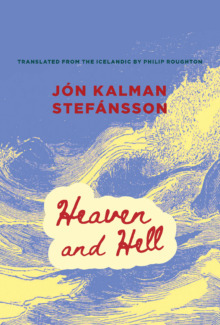
HEAVEN AND HELL

Jón Kalman Stefánsson, author of Heaven and Hell, was interviewed on the Across the Pond podcast about the book. The episode was posted on March 4, and you can listen to it in full here.

Grab Heaven and Hell here!

Media Hits: COMRADE PAPA, NEAR DISTANCE, A CASE OF MATRICIDE, and more!

IN THE NEWS!

COMRADE PAPA

Comrade Papa by GauZ’, translated by Frank Wynne (Oct 8, 2024), was reviewed in the Wall Street Journal! The review was published online on November 14, and is available to read here.

Critic Sam Sacks writes,

“GauZ’ avoids moralizing and is always alive to the humor and peculiarity of his stories. There are very funny scenes of the young Marxist speechifying to his unimpressed elders about the class struggle and the ‘retching of the earth.’ (Frank Wynne’s translation from the French shows a deft touch with Anouman’s malapropisms.)”

Comrade Papa was also a bookseller choice in Electric Literature’s article “The Best Books of the Fall, According to Indie Booksellers”! The list was published November 1, and you can check it out here.

Josh Cook (Porter Square Books) wrote,

“A funhouse mirror version of the colonial adventure story, Comrade Papa pokes, prods, & mocks a whole suite of ideologies & assumptions. GauZ’ has an exuberant, nimble style & an off-center imagination that will keep readers on their toes.”

Get Comrade Papa here!

A WAY TO BE HAPPY

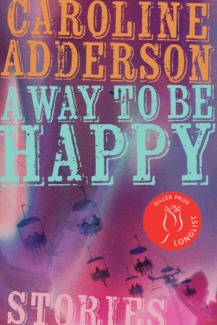
Caroline Adderson, author of A Way to Be Happy (Sep 10, 2024), was interviewed on CBC’s The Next Chapter! The interview with Antonio Michael Downing was posted November 15, and you can read it here.

A Way to Be Happy was also reviewed in FreeFall! The review was posted online on November 3, and you can read it here.

Lori Hahnel writes,

“As the author of many books of fiction and non-fiction, the breadth of Adderson’s writing experience is evident in her craft. This clever and meticulously crafted collection from a writer who has mastered her art is a pleasure to read.”

Get A Way to Be Happy here!

A CASE OF MATRICIDE

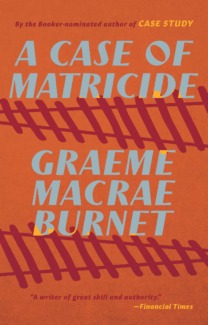
A Case of Matricide by Graeme Macrae Burnet (Nov 12, 2024)was reviewed in the Times Literary Supplement on November 15. You can read it in full here.

Critic Nicolas Cree writes,

“A remarkable crime trilogy of doublings and disappearance . . . These are crime novels in which identities are unstable, evidence is slippery and solutions are obscure.”

A Case of Matricide was also reviewed in the Miramichi Reader on November 14, which you can check out here.

Luke Francis Beirne writes,

“The story in A Case of Matricide is intricately woven, with layers of significance throughout . . . Graeme Macrae Burnet has elevated the detective novel to incredible heights.”

Get A Case of Matricide here!

NEAR DISTANCE

Near Distance by Hanna Stoltenberg, translated by Wendy H Gabrielsen (Jan 14, 2025), was reviewed in Kirkus Reviews. The review was published in their November 15 print issue and is available to read online here.

Kirkus writes,

“Grimly fascinating . . . infused with a sense of dread, and observed in microscopic detail from a bemused and calculated remove. Page after page leaves the reader anxiously waiting for the other shoe to drop.”

Preorder Near Distance here!

HEAVEN AND HELL

Heaven and Hell by Jón Kalman Stefánsson, translated by Philip Roughton (Feb 4, 2025), was given a starred review in Kirkus Reviews! The review was posted online on November 9, and will appear in their December 15 print issue. Read it here.

Kirkus writes,

“A moving story of loss and courage told in prose as crisp and clear as the Icelandic landscape where it takes place. . . Stefánsson writes like an epic poet of old about the price the natural world exacts on humans, but he’s not without sympathy or an ability to find affirming qualities in difficult situations.”

Preorder Heaven and Hell here!

SETH’S CHRISTMAS GHOST STORIES

The 2024 Seth’s Christmas Ghost Stories were featured on So Many Damn Books podcast for the Holiday Gift Guide episode! Listen to the full episode here.

Host Christopher Hamelin says,

“Awesome pocket editions of forgotten horror stories, or mystery stories, from the past, in this perfect set . . . This ‘Ghost Story for Christmas’ series is some of the most delightful reading that I do all year.”

Get all three 2024 Christmas Ghost Stories here!

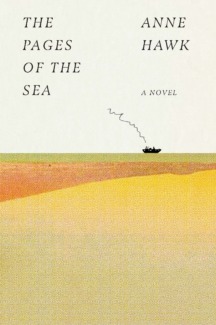
THE PAGES OF THE SEA

The Pages of the Sea by Anne Hawk (Sep 17, 2024) was reviewed in the Ottawa Review of Books. The review was published online, and is available to read here.

Timothy Niedermann writes,

“A moving portrayal of a young girl’s efforts to grow out of a state of melancholy and confusion and acquire self-confidence and assertiveness, despite her young age.”

Get The Pages of the Sea here!

OLD ROMANTICS

Old Romantics by Maggie Armstrong (Apr 1, 2025) was reviewed in The Stinging Fly on November 15, which you can check out here.

Sarah Gilmartin writes,

“Readers of Old Romantics will be swept up in the verve of Armstrong’s storytelling, but the deeper purpose of the humour, as with all good comedic writing, is that of connection, of recognition: this crazy thing called life, tell me you feel it too? The more we laugh, the closer we are to tears. Old Romantics is a collection big on feeling, on living, romanticism with a capital R.”

Preorder Old Romantics here!

Media Hits: THE NOTEBOOK, A WAY TO BE HAPPY, THE PAGES OF THE SEA, and more!

IN THE NEWS

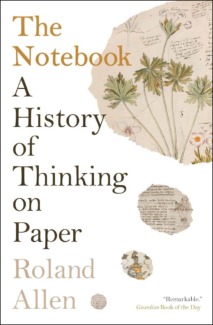
THE NOTEBOOK

The Notebook by Roland Allen (Sep 3, 2024) was reviewed in the New York Times on November 2! The review is available to read online here.

Wilson Wong writes,

“The book is a revealing document of a relationship so intimate as to be sacred: that of the writer and the page. It’s a reminder that note-taking is an act of noticing, of being present and showing up to the blank paper, again and again, and discovering what may arise there.”

Get The Notebook here.

A WAY TO BE HAPPY

A Way to Be Happy by Caroline Adderson (Sep 10, 2024) was reviewed on The Longest Chapter on October 31, and you can read it in full here.

NPR’s Kassie Rose writes,

“It’s difficult to make happiness interesting. Caroline Adderson, however, succeeds with stylish skill. She creates sympathetic characters struggling with inner complexities—what it feels like to be a disappointment, or to not be believed, or to lead a passionless life; always offering, though, an encounter providing a respite from loneliness or isolation.”

Grab A Way to Be Happy here!

THE PAGES OF THE SEA

Anne Hawk, author of The Pages of the Sea (Sep 17, 2024), was interviewed on The Conversation podcast (here) on October 21, and also talked about her debut novel on the Bookspo podcast (here) on October 16.

Grab The Pages of the Sea here!

MAY OUR JOY ENDURE

Kev Lambert, author of May Our Joy Endure (trans. Donald Winkler, Sep 3, 2024), was profiled in the Globe and Mail by Emily Donaldson on October 25! You can read the full feature here.

Donaldson calls Lambert,

“[A] literary wunderkind.”

May Our Joy Endure was also reviewed in the Montreal Review of Books on October 30. Check out the full review here.

Marisa Grizenko writes,

“Like Bruegel and Blais, Lambert uses a large cast of characters to depict society’s complexities. His gaze is oceanic, homing in on individuals and zooming out to the systems within which they operate.”

Get May Our Joy Endure here!

QUESTION AUTHORITY

Mark Kingwell, author of Question Authority (Nov 5, 2024), was interviewed on the Canadaland podcast on October 28. Listen to the full episode here.

Grab Question Authority here!

A CASE OF MATRICIDE

A Case of Matricide by Graeme Macrae Burnet (Nov 12, 2024) was reviewed in the Los Angeles Times as part of their list of “10 books to add to your reading list in November.” The article was published online on November 1, and you can read it here.

Bethanne Patrick writes,

“Burnet’s trilogy concludes with a mystery about what we put up with in mystery narratives . . . It’s smart, quirky and fun.”

Grab A Case of Matricide here!

SETH’S CHRISTMAS GHOST STORIES 2024

Seth’s Christmas Ghost Stories (Oct 29, 2024) were featured on the Total Christmas Podcast on October 26, and you can listed to the segment (starting at 16:00) here.

Host Jack Ford calls the trio,

“Delightful little books . . . it’s something that people that love Christmas might enjoy, reviving that old tradition of Christmas ghost stories.”

Podolo, one of this year’s three stories, was read in full on the Christmas Past Podcast by Brian Earl. You can listen to the full episode here.

Grab all three Seth’s Christmas Ghost Stories here!

Media Hits: COMRADE PAPA, THE NOTEBOOK, A WAY TO BE HAPPY, and more!

COMRADE PAPA

Comrade Papa by GauZ’, translated by Frank Wynne (Oct 8, 2024), was reviewed in the New York Times! The review was published online on Oct 8, and you can check it out here.

Nadifa Mohamed writes,

Comrade Papa incorporates many small shards of history and storytelling into an overall gleaming mosaic.”

Grab Comrade Papa here!

THE NOTEBOOK

The Notebook by Roland Allen (Sep 3, 2024) was reviewed in the New Yorker! The review was published online on Oct 14, and in their Oct 21 print edition. You can read it here.

The New Yorker writes,

“Allen’s narrative moves fluidly as he recounts the evolution of the notebook’s use.”

Get The Notebook here!

A CASE OF MATRICIDE

A Case of Matricide by Graeme Macrae Burnet (Nov 10, 2024) was reviewed in the Guardian. The review was published online on Oct 18, and you can read it here.

Laura Wilson writes,

“This quirky blend of psychological thriller and smalltown life is both thought-provoking and entirely convincing.”

A Case of Matricide was reviewed in the Times on October 15, and you can check out the full article here.

James Walton calls it,

“A perfect conclusion to the trilogy.”

A Case of Matricide was also reviewed in the Spectator on October 12. You can check out the review here.

Andrew Rosenheim writes,

A Case of Matricide demonstrates literary talent of the highest order.”

Grab A Case of Matricide here!

A WAY TO BE HAPPY

A Way to Be Happy by Caroline Adderson (Sep 10, 2024) was reviewed in Scout Magazine’s Book Club Vol. 17! Caroline was also interviewed on Oct 23. You can check out their review here and the full interview here.

Thalia Stopa writes,

“This well-seasoned author has managed to steer clear of the hazards of kitsch or gratuitousness to produce a near-perfect collection about a bunch of very imperfect yet entirely plausible characters and scenarios.”

A Way to Be Happy was also reviewed in the Winnipeg Free Press! The review was published online on Oct 19, and you can read it here.

Carrie Hatland writes,

“When seeking happiness, there is always a cost. The journey is never simplistic, and when it comes to complexity, Adderson is a master.”

Grab A Way to Be Happy here!

MAY OUR JOY ENDURE

May Our Joy Endure by Kev Lambert, translated by Donald Winkler (Sep 3, 2024) was featured in Lavender Magazine. The feature was published online on Oct 17, and you can check it out here.

E.B. Boatner writes,

“Lambert, whose Querelle of Roberval won the Marquis de Sade Prize, knows instinctively how not to pull a punch . . . worth the ride.”
Grab May Our Joy Endure here!

Media Hits: MAY OUR JOY ENDURE, ON COMMUNITY, A CASE OF MATRICIDE, and more!

IN THE NEWS!

MAY OUR JOY ENDURE

May Our Joy Endure by Kev Lambert, translated by Donald Winkler (Sep 3, 2024) was featured in Lit Hub‘s list of “The 16 Best Book Covers of September.” The article was published online on September 26, and you can check it out here.

Grab May Our Joy Endure here!

A CASE OF MATRICIDE

A Case of Matricide by Graeme Macrae Burnet (Nov 12, 2024) was reviewed in the Sunday Post! The review was published in print on September 29.

The Post writes,

“The most ‘action-packed’ of the trio, it [A Case of Matricide] is a master class in characterisation. Unnervingly dark—and at times, surprisingly humorous—it took its toll on the author.”

Get A Case of Matricide here!

ON COMMUNITY

On Community by Casey Plett was reviewed in Geist, in their Fall 2024 print issue.

Reviewer Kristina Rothstein writes,

“A spiral of thoughts and anecdotes organized around questions concerning what it means to be part of the queer and trans communities, On Community . . . is a heartfelt, funny, wistful read—just conceptually rigorous enough to provoke thought, but without difficult theory or jargon.”

Grab On Community here!

THE NOTEBOOK & A WAY TO BE HAPPY & HELLO, HORSE

The Notebook by Roland Allen (Sep 3, 2024), A Way to Be Happy by Caroline Adderson (Sep 10, 2024), and Hello, Horse by Richard Kelly Kemick (Aug 10,2024) were all featured in the Windsor Star! The article highlighted the books and their upcoming launches at Biblioasis Bookshop on September 30 and October 2. Check out the article here.

Grab The Notebook here!

Get A Way to Be Happy here!

Get Hello, Horse here!